What Happens to Pet Waste in Landfills?
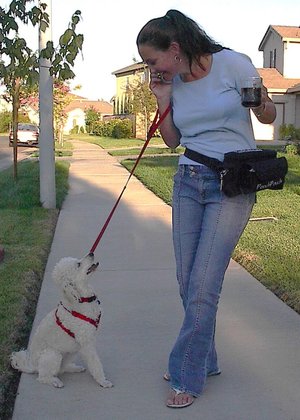
Every day, millions of dog owners do the “right thing.” They bag the waste, tie it off, and drop it in the bin. It feels responsible. It looks responsible. But here is the part nobody tells you: that bag is going to sit in a landfill for up to a thousand years, slowly leaking bacteria into the soil and pumping methane into the atmosphere. The "right thing" we have all been doing? It has a serious dark side.
Why Pet Waste Is Not Just a Hygiene Issue
Most people treat pet waste as a cleanliness problem, something to get off the sidewalk and out of sight. The U.S. Environmental Protection Agency (EPA) sees it differently. They classify pet waste as a nonpoint source pollutant, placing it in the same regulatory category as agricultural runoff, motor oil, and industrial pesticides.
That classification matters because it tells you something about scale. The United States is home to roughly 90 million dogs. Together, they produce around 24.6 billion pounds of waste every year. The USDA Forest Service has documented that waste from just 100 dogs, left for 48 hours near a water source, contains enough fecal bacteria to trigger a full shutdown of swimming and shellfish harvesting in a nearby bay. Multiply that across an entire country, and you start to understand why regulators stopped treating this as a backyard nuisance.
How Pet Waste Actually Breaks Down Underground
Here is something most people get wrong: landfills are not designed to break things down. They are designed to contain them.
The interior of a modern landfill is compacted, sealed, and almost entirely oxygen-free. That environment triggers a process called anaerobic decomposition, which is fundamentally different from the way organic matter breaks down in open air or a compost pile. Without oxygen, nothing properly biodegrades. Instead, it ferments, produces gas, and slowly releases liquid. And because everything is tightly packed and sealed, that process stretches across decades rather than weeks.
A single gram of dog waste contains approximately 23 million fecal coliform bacteria, according to research published in Applied and Environmental Microbiology. Pathogens like E. coli, Salmonella, Campylobacter, and Giardia thrive in the low-oxygen conditions of a landfill. Many survive for months. Some, depending on moisture and temperature, persist far longer than that.
This is not waste quietly disappearing underground. It is a slow biological reaction happening in the dark.
The Methane Hiding Inside Pet Waste
Anaerobic decomposition has another consequence that goes well beyond bacteria. When organic matter breaks down without oxygen, it releases methane as a primary byproduct. The IPCC's Sixth Assessment Report rates methane as roughly 80 times more potent than carbon dioxide as a greenhouse gas over a 20-year window.
Landfills are already among the largest human-made sources of methane in the United States. Every organic item that goes in, including animal waste, adds to that output. What makes pet waste particularly problematic is that most of it arrives sealed inside plastic bags. The plastic traps moisture and blocks microbial contact, slowing decomposition to almost nothing. Instead of breaking down and releasing gas in a manageable, capturable stream, the waste ferments in a sealed environment for centuries. Researchers studying landfill gas composition have found that sealed organic material produces methane in unpredictable, diffuse emissions that are far harder to capture than the centralized venting systems most facilities use.
What Pet Waste Leachate Does to the Water Beneath Your Feet?
As waste compresses under its own weight over the years, it releases a liquid called leachate. Think of it as the concentrated byproduct of everything rotting in a landfill at once: bacteria, ammonia, nitrogen, heavy metals, and dissolved organic compounds, all moving slowly downward through layers of compacted material.
Modern landfills use multi-layer liner systems to catch this liquid before it reaches the surrounding soil and groundwater. The problem, documented in the Environmental Research Journal, is that no liner system remains fully intact indefinitely. Ground movement, chemical degradation, and the sheer weight of accumulated waste create micro-fractures over time. When those fractures allow leachate to migrate, the nitrogen and pathogens from animal waste enter the local water table directly.
In communities that rely on groundwater wells, elevated nitrate levels from animal waste contamination have been linked to methemoglobinemia in infants, a condition that interferes with the blood's ability to carry oxygen. This is not a hypothetical risk. It has been documented in real communities near aging landfill sites across the Midwest and Southeast.
The Plastic Bag Paradox
There is a real irony buried in this. The tool most commonly associated with responsible pet ownership ends up being one of the biggest parts of the problem.
A standard plastic bag takes between 500 and 1,000 years to fully degrade. When it goes into a landfill sealed around organic waste, it creates what researchers sometimes call a "dry tomb" effect. The contents are cut off from the moisture and microbial activity that would normally accelerate decomposition. Biodegradable and compostable bags are marketed as the solution, and they do break down faster under the right conditions. But those conditions require heat, oxygen, and active microbial populations. A standard landfill has almost none of those things. Certified compostable bags buried in a landfill degrade only marginally faster than conventional plastic.
The bag is not solving the problem. It is extending it.
How WasteAway from Pet Habitats Changes the Pet Waste Equation
The fundamental flaw in the current system is that it routes waste through a facility that was never built to handle it safely. WasteAway by Pet Habitats takes a different approach entirely, targeting the waste before it ever enters that stream.
WasteAway uses an enzyme-based breakdown system that replicates the conditions of active composting at the point of disposal. The enzymes accelerate pathogen neutralization and decomposition at the source, dramatically cutting the volume and biological activity of waste that would otherwise end up in a landfill. The science behind it draws on the same principles that make municipal composting effective, applied at a scale and format that works for individual pet owners.
Pet Habitats built WasteAway around a straightforward premise: the closer to the source you can manage pet waste, the less damage it does downstream. That is not just a product philosophy. It is what the environmental science on landfill contamination actually supports.
Smarter Habits That Actually Make a Difference
Changing your routine does not have to mean a complete overhaul.
Flushing waste is one of the most effective options available, and the EPA explicitly recommends it in many cases. Wastewater treatment plants are specifically engineered to handle fecal pathogens in ways that landfills simply are not. This works best as a home habit rather than an on-the-go solution, but it removes waste from the landfill system entirely.
In-ground backyard digesters offer a low-cost alternative for homeowners with outdoor space. They work by using naturally occurring soil bacteria to break down waste underground, skipping the landfill entirely and returning safe byproducts to the soil.
If bagging remains part of your routine, choose bags certified under ASTM D6400 or EN 13432 and confirm that your local composting facility accepts pet waste before adding it to a green bin. Most do not, and the distinction matters.
The smallest shift is the most important one: understanding that the familiar routine of bag and bin is not a neutral act. It is a choice with real environmental consequences. And once you see that clearly, it becomes much easier to choose something better.